
Why “Normal” Labs Don’t Always Mean You’re Well
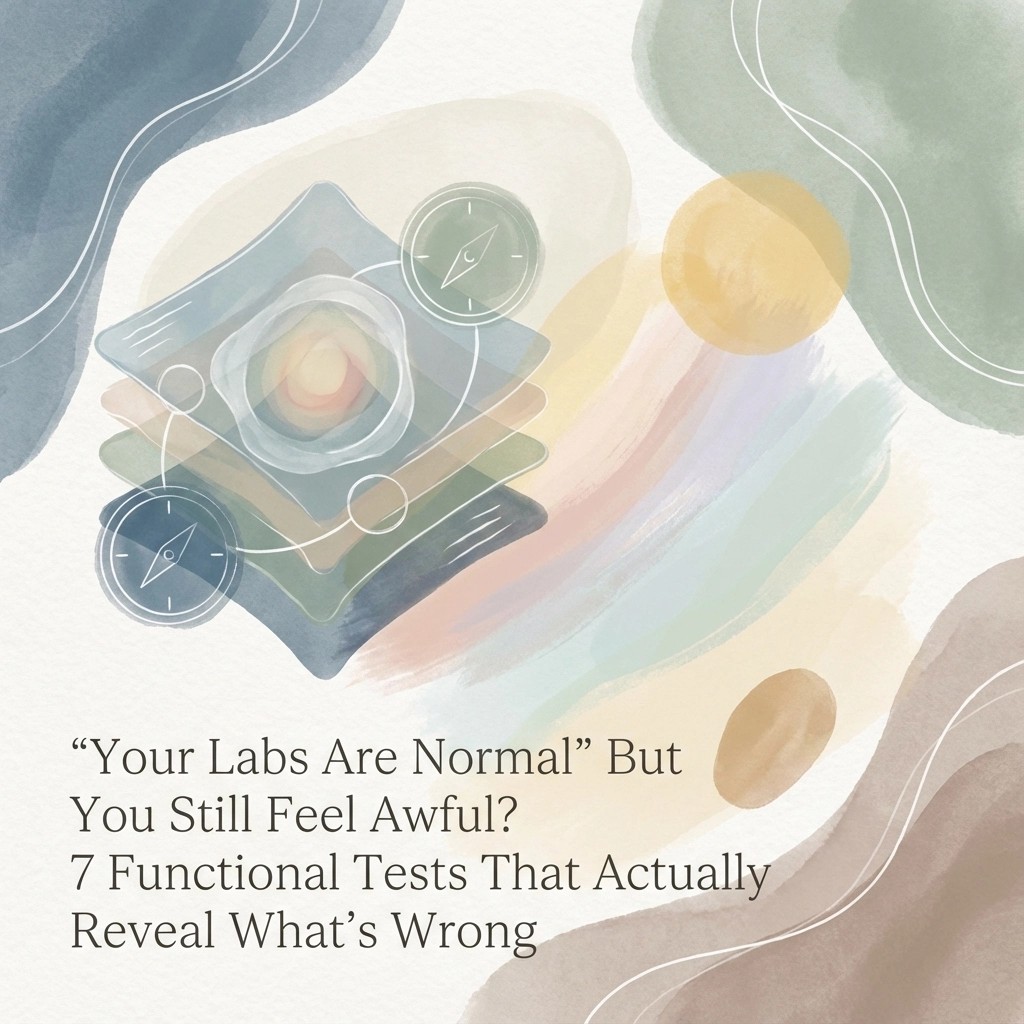
If you’ve ever been told your labs are “normal,” yet you still feel exhausted, inflamed, anxious, foggy, or just off — you’re not alone.
And more importantly: you’re not imagining it.
One of the biggest gaps in modern healthcare isn’t a lack of testing — it’s a lack of context.
Labs Are a Snapshot, Not the Whole Story
Lab work is valuable. It gives us measurable data and helps identify disease, deficiencies, and risk markers. But labs are still just a snapshot in time.
They often show:
- where the body has already been
- what has reached a diagnosable threshold
- averages based on wide “normal” ranges
What they don’t always show is:
- how well systems are communicating
- how the body is compensating
- early dysfunction before disease sets in
- why symptoms exist even when numbers look fine
This is why so many people feel dismissed when results come back “normal.”
Symptoms Are Signals, Not Inconveniences
Symptoms are often treated like problems to silence — but in reality, they’re messages.
Fatigue.
Bloating.
Anxiety.
Weight changes.
Brain fog.
Sleep issues.
Hormone irregularities.
Bloating.
Anxiety.
Weight changes.
Brain fog.
Sleep issues.
Hormone irregularities.
These aren’t random. They’re patterns.
Symptoms tell us:
- the body is under stress
- something isn’t flowing correctly
- a system is compensating for another
- the nervous system is overloaded
When symptoms are ignored or minimized, the body doesn’t stop communicating — it just gets louder.
Function Shows What’s Happening Now
This is where most people have never been guided.
Function looks at how the body is operating in real time, not just whether it has crossed a diagnostic line.
Functional insight helps us understand:
- how digestion is working today
- whether detox pathways are open or congested
- how stress is impacting hormones
- how well minerals, enzymes, and fluids are balanced
- how the nervous system is responding to daily life
When function is assessed, symptoms stop feeling random.
They start making sense.
They start making sense.
Why People Feel Stuck
Many people end up stuck because they’re moving between:
- providers who only look at labs
- protocols that don’t match how their body functions
- supplements their body can’t properly utilize
- advice that contradicts itself
Without someone connecting the dots, the responsibility falls on the patient — and that’s exhausting.
Feeling stuck doesn’t mean you’ve failed.
It usually means no one has looked at everything together.
It usually means no one has looked at everything together.
A Different Way Forward
When labs, symptoms, and function are understood together, clarity emerges.
Instead of guessing, there’s direction.
Instead of chasing symptoms, there’s strategy.
Instead of feeling broken, people begin to feel understood.
Instead of chasing symptoms, there’s strategy.
Instead of feeling broken, people begin to feel understood.
This isn’t about doing more.
It’s about seeing more.
It’s about seeing more.
And when the full picture is finally considered, healing becomes possible in a way that feels grounded, supportive, and sustainable.
There’s a reason so many people feel unheard.
And there’s a better way to listen.
And there’s a better way to listen.
If this helped put words to what you’ve been feeling, stay close. We’ll be sharing more education and insight as we head into January.
There are 100,000 chemicals on the market today. The toxic Substance Control Act of 1976 grandfathered them in. What does that mean to you? Simply put: these chemicals have not had any safety testing, and we know very little information about their side effects. Since 1940's prostate cancer is up 200%, Thyroid cancer up 155%, Brain cancer up 70%. What happens when your body is chemically overloaded? It may not be cancer, but we can feel in ways like: lethargy, inability to focus, sleep trouble, chronic inflammation, unexplained pain, skin issues, adult acne, hot flashes, stress, anxiety, and fear.
If you are tired of living in a chemically overloaded world, click the link below and learn how easy it is to change out chemicals for toxic-free living.